Comparison

Video AI vs thermal cameras vs on-camera analytics for fire and intrusion

Video smoke detection on existing CCTV sees visible smoke and flame, often early, without new cameras. Thermal cameras see heat, so they are better for hidden hotspots, pitch-dark scenes and views through smoke. On-camera analytics runs on the camera itself and depends on the model. They are not rivals: many sites combine video AI for wide coverage with thermal for the hottest risks.

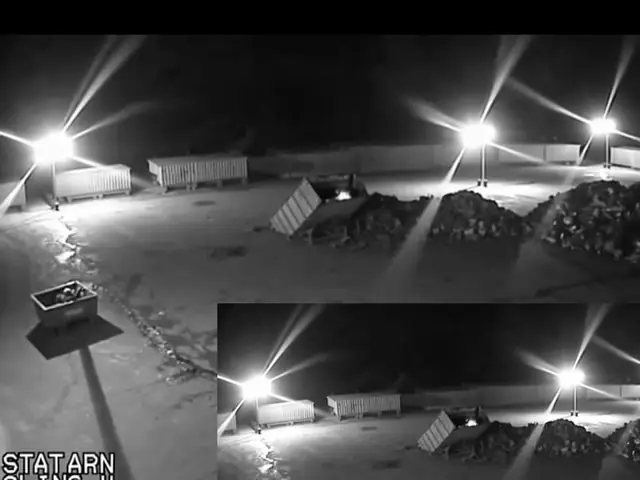
Night-time infrared CCTV view of a storage yard where Woodcock AI detected an early fire in a skip
A real Woodcock AI detection on an ordinary infrared CCTV camera at night.
Quick selector

Which is right for my site?

Answer five questions for a suggested starting point.

Site size
Where are the risks?
Existing cameras
Priority
What matters most?

Suggested combination

Video AI on your existing cameras

    A guide, not a site survey. The free site assessment looks at your actual cameras and risks.

    Side by side

    How video AI, thermal and on-camera analytics compare

    The approaches, not brands. On a phone, swipe across the cards.

    Comparison of video AI on existing CCTV, thermal cameras and on-camera analytics
    QuestionVideo AI on existing CCTVThermal camerasOn-camera analytics
    What it detectsVisible smoke and flame, plus people, vehicles and PPE, from the ordinary pictureHeat: surface temperature and hotspots, and people or vehicles by their heat signatureWhatever the camera model supports, often line crossing and intrusion; some models add fire or smoke
    New hardware neededNo new cameras; an on-site edge server or a connection to the Woodcock AI CloudThermal cameras, mounts and cabling, often radiometric models if you need temperature readingsCameras that support the analytics, which can mean replacing older models
    Works on existing camerasYes, on ONVIF or RTSP cameras and recordersOnly if thermal cameras are already fittedOnly if your cameras already support the apps you need
    Intrusion and peopleYes: people and vehicles in zones you draw, on a schedule, with the clip attachedYes: people and vehicles by heat signature, useful in darkness and at long range, but with less detail to identify what is happeningOften basic line-crossing or intrusion rules on supported models, configured camera by camera
    Sees smoke before heatYes, when smoke is visible to the camera, often before surface heat is high enough to stand outNo. Thermal measures heat, and smoke is largely see-through at thermal wavelengthsDepends on the model and its processing power
    Weather and night limitsNeeds light or infrared; heavy fog, rain, glare and very dark scenes can hide smokeWorks in darkness and through smoke; heavy rain or fog over distance, sun-warmed surfaces and reflections can affect readingsSame optical limits as the camera, with less processing power to work with
    Set-upConnect existing cameras, then draw zones and choose alerts, with our helpNew installation, positioning and temperature thresholds for each sceneSet up camera by camera in each camera's own settings

    Video AI on existing CCTV

    What it detects
    Visible smoke and flame, plus people, vehicles and PPE, from the ordinary picture
    New hardware needed
    No new cameras; an on-site edge server or a connection to the Woodcock AI Cloud
    Works on existing cameras
    Yes, on ONVIF or RTSP cameras and recorders
    Intrusion and people
    Yes: people and vehicles in zones you draw, on a schedule, with the clip attached
    Sees smoke before heat
    Yes, when smoke is visible to the camera, often before surface heat is high enough to stand out
    Weather and night limits
    Needs light or infrared; heavy fog, rain, glare and very dark scenes can hide smoke
    Set-up
    Connect existing cameras, then draw zones and choose alerts, with our help

    Thermal cameras

    What it detects
    Heat: surface temperature and hotspots, and people or vehicles by their heat signature
    New hardware needed
    Thermal cameras, mounts and cabling, often radiometric models if you need temperature readings
    Works on existing cameras
    Only if thermal cameras are already fitted
    Intrusion and people
    Yes: people and vehicles by heat signature, useful in darkness and at long range, but with less detail to identify what is happening
    Sees smoke before heat
    No. Thermal measures heat, and smoke is largely see-through at thermal wavelengths
    Weather and night limits
    Works in darkness and through smoke; heavy rain or fog over distance, sun-warmed surfaces and reflections can affect readings
    Set-up
    New installation, positioning and temperature thresholds for each scene

    On-camera analytics

    What it detects
    Whatever the camera model supports, often line crossing and intrusion; some models add fire or smoke
    New hardware needed
    Cameras that support the analytics, which can mean replacing older models
    Works on existing cameras
    Only if your cameras already support the apps you need
    Intrusion and people
    Often basic line-crossing or intrusion rules on supported models, configured camera by camera
    Sees smoke before heat
    Depends on the model and its processing power
    Weather and night limits
    Same optical limits as the camera, with less processing power to work with
    Set-up
    Set up camera by camera in each camera's own settings
    Three ways of seeing

    What each method actually sees

    The short answer: video AI reads the ordinary picture for the shape and movement of smoke, flame, people and vehicles; a thermal camera measures heat; on-camera analytics apply simple rules such as a line being crossed. They answer different questions, which is why they work best together.

    • Video AISees visible smoke, flame, people and vehicles in the normal picture
    • ThermalSees surface heat, even in total darkness or through light smoke
    • On-camera analyticsApplies fixed rules to movement inside the camera
    Comparison diagram of the three detection methodsA smouldering stockpile seen three ways: video AI marks a visible smoke plume, a thermal camera shows a hot core below the surface, and on-camera analytics only reacts when something crosses a drawn line. Video AI Visible smoke flagged Thermal Hidden heat flagged On-camera analytics Virtual lineOnly reacts to crossings Illustrative diagram, not to scale
    Illustrative diagram: the same smouldering pile, seen by each method.
    Example detection

    What a video AI detection frame shows

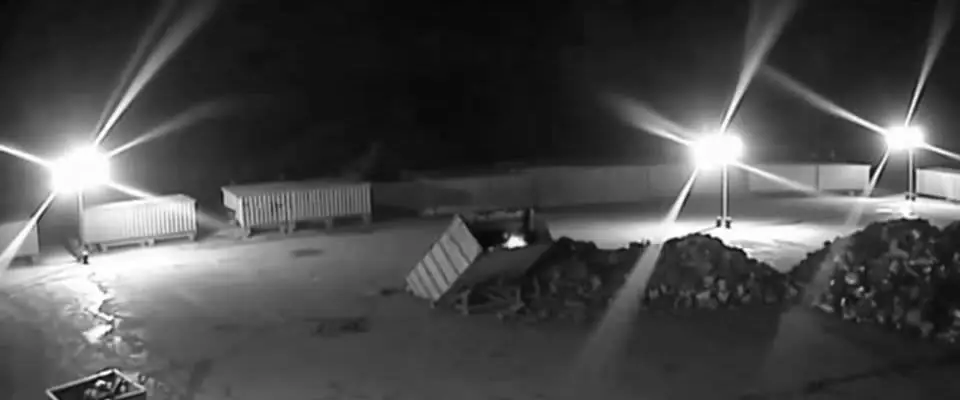
    A video AI alert is a picture you can check, not just a beep. The frame below is real infrared footage from an existing CCTV camera at a storage yard at night, where Woodcock AI detected an early fire in a skip. The labels were added for this page to explain what is in view.

    Real night-time infrared CCTV frame of a storage yard with floodlights, containers and stockpiles, with a small fire in a tipped skip
    Real Woodcock AI detection footage. Labels are illustrative annotations added for this page.

    This is also where the methods differ. A thermal camera covering this skip would have shown heat, possibly before the flame was visible, but only within its own narrower field of view. A line-crossing rule on the camera would not have reacted at all, because nothing crossed a line.

    Side-by-side diagram of the same skip as a visible camera sees it, with smoke and flame, and as a thermal camera sees it, as a bright heat spot Visible camera (video AI)Sees smoke and flame across a wide view Thermal cameraSees heat, often before flame, in a narrower view
    Illustrative diagram, not real camera output.
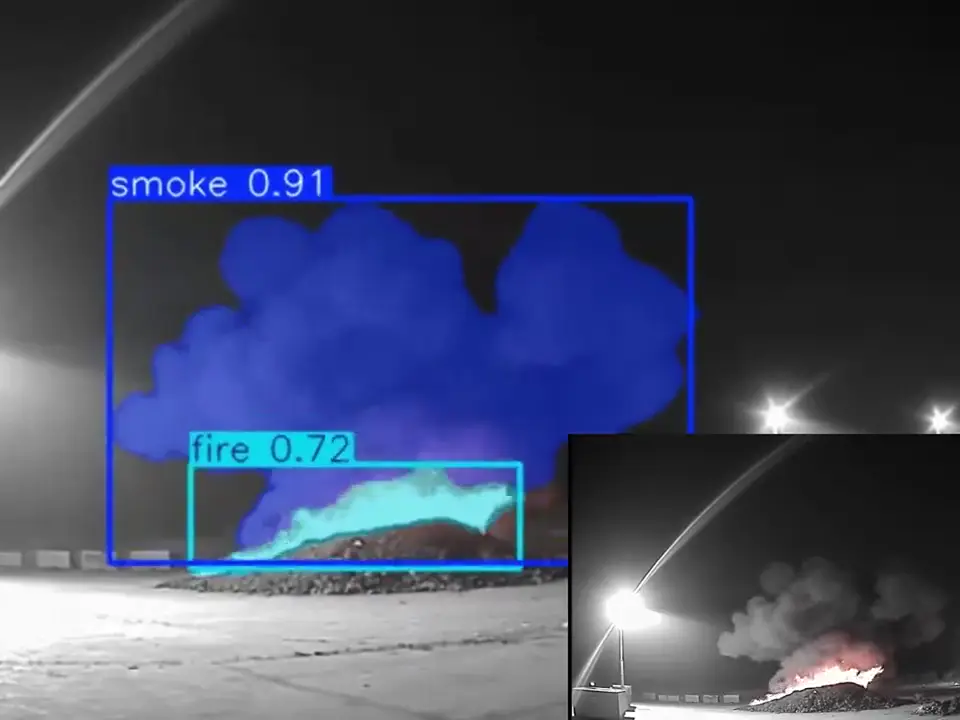
    Real night-time infrared CCTV frame of a waste stockpile with smoke and flame, boxed and labelled smoke and fire by Woodcock AI
    Real Woodcock AI detection output on an existing CCTV camera at a waste site.
    Worked scenarios

    Three sites, three starting points

    These are illustrative scenarios, not case studies. Each shows where one method naturally leads and what the others add.

    A waste stockpile at night: thermal leads

    A recycling yard stores mixed waste in large piles. Fires in stockpiles can start deep inside and smoulder for hours, often overnight when the site is empty. Heat is the first sign, and it can build below the surface long before smoke appears. Thermal cameras aimed at the largest piles are the natural lead here, because heat building inside a pile can show as a warm patch on the surface that no ordinary camera can see. Regular temperature checks still matter, because no camera sees deep inside a pile.

    Video AI adds coverage of everything else on the yard: the tipping area, bale stores, vehicles and the boundary. When smoke does appear, the alert comes with a clip, so the duty manager can see at once whether it is a real fire or steam from a wet pile. A certified fire alarm still covers the buildings. The fire prevention plan checklist explains what the Environment Agency guidance expects for detection.

    A warehouse: video AI leads

    A distribution warehouse already has dozens of CCTV cameras covering racking, loading bays and charging areas. Smoke from a pallet, a charging forklift battery or a skip by the dock would be visible to those cameras. Video AI on the existing cameras gives wide coverage quickly, with no new hardware on most cameras, and can also flag people in the building out of hours.

    Thermal earns its place on specific risks, such as a battery charging bay or a hot process. On-camera analytics may already be switched on for door areas, and can stay as a simple extra. Indoors, the certified fire alarm remains the primary system; video AI adds a visual check and earlier warning where smoke is visible to a camera.

    A vehicle yard: intrusion first, then fire

    A depot parks vans and lorries overnight on a large fenced yard. The main worries are people climbing the fence and vehicle fires. Thermal cameras are strong on long, dark perimeters, because people and vehicles stand out by heat at distance. Video AI on the existing yard cameras can tell people and vehicles apart from weather and headlights, and sends a clip showing who is there, so someone can decide whether to call the police.

    The same cameras can watch for smoke from a parked vehicle. Alerts can go to your phone, and to a monitoring centre (ARC) or by phone call as options. On-camera line crossing on the gate camera can stay as a basic layer.

    Decision guide

    How to choose

    Start with the risk, not the technology. Work through these questions in order.

    1. 1. What is the first sign of trouble?If it is heat inside material or plant, put thermal on that spot. If it is visible smoke, flame or a person, video AI on the cameras that already see it is the faster start.
    2. 2. How much area do you need to cover?Video AI scales across every camera you already have. Thermal is usually targeted at the few areas where heat matters most.
    3. 3. What can your cameras see at night?Video AI needs a usable picture, from lighting or infrared. In very dark or long-range areas, thermal may be the better fit.
    4. 4. Who acts on an alert?An alert is only useful if someone sees it. Decide whether it goes to staff phones, a monitoring centre or a phone call, and check that the clip gives them enough to act.
    5. 5. What does your permit or insurer expect?Check your fire prevention plan, fire risk assessment and insurer. None of these methods replaces a certified fire alarm.
    Being fair

    When thermal is the better choice

    Thermal imaging measures heat rather than light, which makes it the stronger tool in some situations.

    • Hidden hotspots in pilesHeat building inside a stockpile can show as a warm patch on the surface before any smoke or flame is visible. Neither camera type sees deep inside a pile, which is why the Environment Agency also expects regular temperature checks.
    • Pitch dark, no infraredThermal needs no light at all. Ordinary cameras need daylight, site lighting or infrared to see smoke.
    • Seeing through smokeThermal cameras can see heat through smoke, which helps show where a fire is once smoke has filled a building.
    • Temperature thresholdsRadiometric thermal cameras can alarm at a set temperature, which suits equipment, conveyors and battery storage.
    Layers

    How they combine

    Most sites end up with layers rather than a single winner. Each layer covers a gap in the others: the alarm meets the legal baseline, video AI gives wide visual coverage on cameras already installed, thermal watches the few places where heat comes first, and simple on-camera rules handle basic boundary events. The key is that alerts from every layer reach the same people, so nothing waits to be noticed.

    1. Certified fire alarmThe base layer every site keeps, designed to recognised standards.
    2. Video AI on existing CCTVWide coverage of smoke, flame and intruders across yards and buildings, with the clip sent to your phone. Alerts can also go to a monitoring centre (ARC), or by phone call, as options.
    3. Thermal on the hottest risksThermal cameras aimed at stockpiles, quarantine bays or plant where heat is the first sign.
    4. On-camera analytics where it fitsBasic line crossing on cameras that already support it, alongside the other layers.

    Sources: Environment Agency, Fire prevention plans: environmental permits, which lists smoke and heat detectors including temperature probes, CCTV visual flame detection, and spark, infrared and ultraviolet detection as appropriate automated systems. General thermal imaging behaviour is described in plain terms; performance varies by product and scene.

    FAQ

    Comparison questions

    Thermal, video AI and what each needs.

    Something else?office@woodcock.ai
    Is thermal better than video smoke detection?
    Neither is better for everything. Thermal cameras are better at heat: they see hotspots and fire in pitch dark or through smoke. Video smoke detection is better at seeing the smoke itself, which is often the first visible sign of a fire, and it can run on the cameras you already have. Many sites use both.
    Can I use both?
    Yes, and many sites do. A common approach is video AI on the existing cameras for wide coverage of smoke, flame and intruders, with thermal cameras pointed at the highest-risk spots, such as stockpiles or a battery quarantine bay.
    Do I need to replace my cameras?
    Not for video AI. Woodcock AI works with ONVIF or RTSP cameras and recorders, so you do not need to swap to fire-detection camera models. Thermal detection does need thermal cameras, and on-camera analytics needs cameras that support the apps you want.
    Which is best for waste sites?
    Waste sites usually benefit from layers: video AI across the yard and buildings to catch smoke and flame early, day and night, and thermal monitoring of stockpiles where heat can build below the surface. The Environment Agency fire prevention plan guidance lists smoke and heat detectors, CCTV visual flame detection and infrared detection among appropriate automated systems.
    Which is better for intrusion at night?
    Thermal cameras pick out people and vehicles by heat in total darkness and over long distances, which suits large perimeters. Video AI on existing cameras uses the light or infrared the cameras already have, and sends a clip that shows who or what is there, in zones and on schedules you choose. Many sites use video AI on existing cameras and add thermal only for long, dark boundaries.
    Do any of these replace a certified fire alarm?
    No. Video AI, thermal cameras and on-camera analytics all add earlier warning and visual confirmation, but none of them replaces a certified fire detection and alarm system. Keep your fire alarm, and treat these as an extra layer.
    Free site assessment