

Certified fire alarm
The legal and insurance baseline for buildings, with sprinklers and suppression where your risk assessment calls for them. Nothing on this page replaces it.
Lithium-ion battery fires at recycling sites usually start when a hidden battery is crushed in a bin lorry, tipping hall, picking line or baler. The best protection is layered: a certified fire alarm, video AI on existing CCTV to spot the first visible smoke anywhere on site, and thermal or gas detection on battery quarantine areas.
By Woodcock AI · Published
Batteries hidden in vapes, toothbrushes, phones and other small electricals end up in general waste and mixed recycling. When they are punctured, crushed or damaged in a refuse vehicle compactor or during sorting, they can catch fire (NFCC). NFCC also notes these fires create their own oxygen, so they can keep reigniting (NFCC).
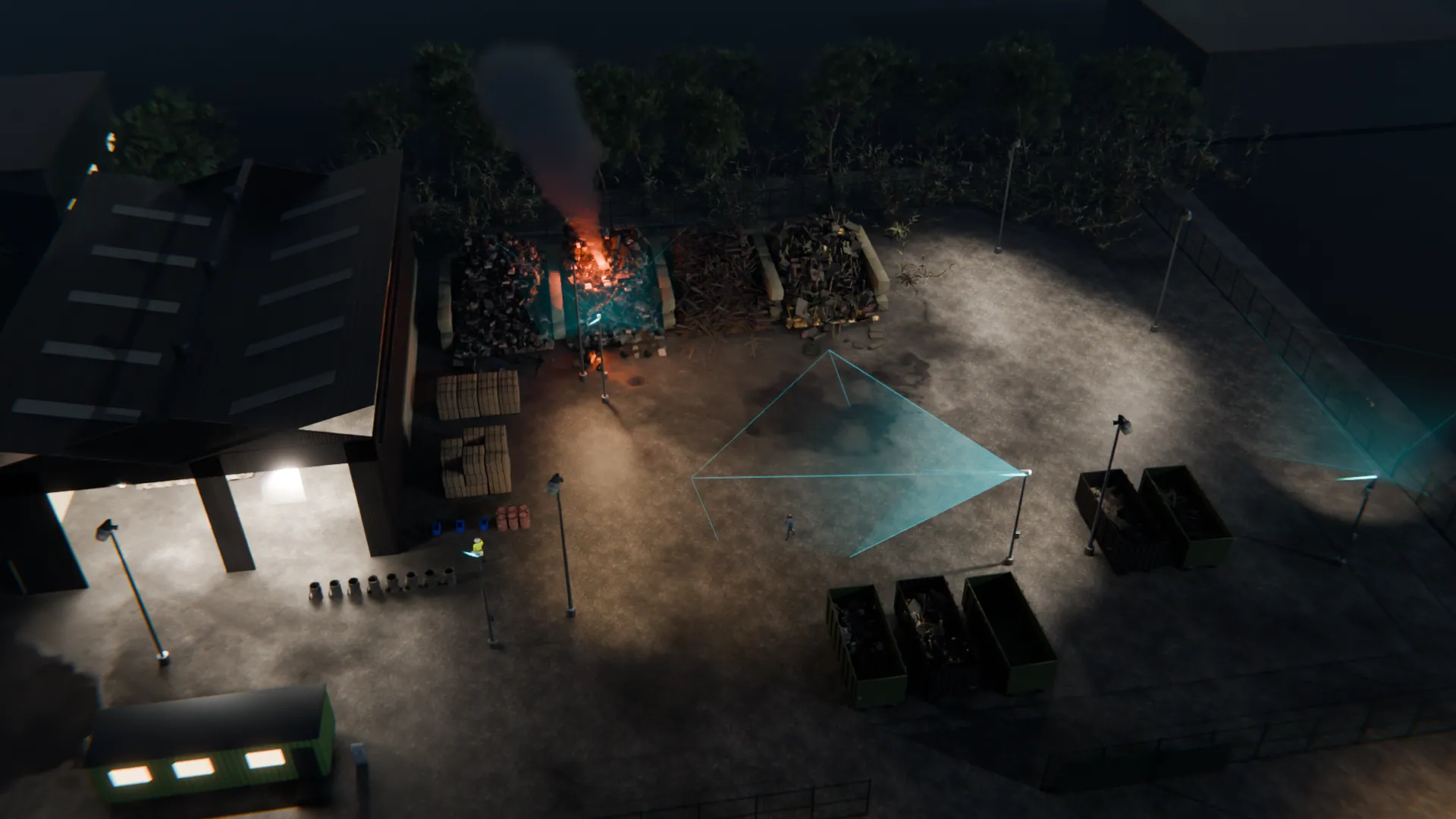 Illustrative 3D render
Tap a numbered pin or a zone name to see why fires start there and what the cameras watch for.
 Illustrative render
Woodcock AI looks for visible smoke and flame and is trained to tell smoke from fog, dust and steam. It cannot see heat inside a pile or container before smoke appears.
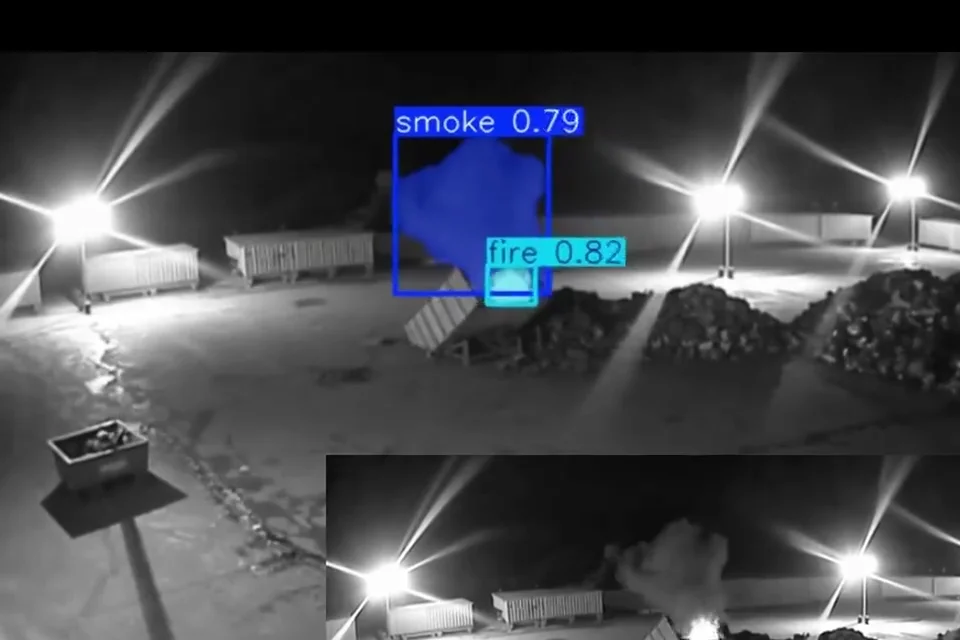
This is real Woodcock AI output on an ordinary infrared camera in a storage yard at night. The AI draws a box around the smoke and the flame and sends the clip to the people you choose.
Alerts to a monitoring centre (ARC) and phone-call alerts are available as optional add-ons.
The legal and insurance baseline for buildings, with sprinklers and suppression where your risk assessment calls for them. Nothing on this page replaces it.
Wide coverage of tipping halls, lines, balers and yards, with the clip sent to your phone. Alerts to a monitoring centre (ARC) and phone-call alerts are available as optional add-ons.
Heat and off-gas monitoring where damaged batteries are stored together, as the Environment Agency guidance suggests.
In May 2026 the Environment Agency published Waste batteries: appropriate measures for permitted facilities (21 May 2026). It applies to facilities permitted to treat or transfer separate collections of waste batteries, and sets out measures for general management, waste acceptance and tracking, storage and handling, treatment, emissions control and monitoring, and process efficiency. On fire, it says:
“Areas where waste batteries are stored, handled or treated must be provided with appropriate fire detection and suppression systems.”Waste batteries: appropriate measures for permitted facilities, GOV.UK. Last checked 22 October 2026.
The same guidance says detection should be chosen from a site-specific fire risk assessment and consultation with the local fire and rescue service, and that gas detection may help give early warning where lithium-ion batteries are stored. Sites with a fire prevention plan should also follow the Environment Agency fire prevention plan guidance.
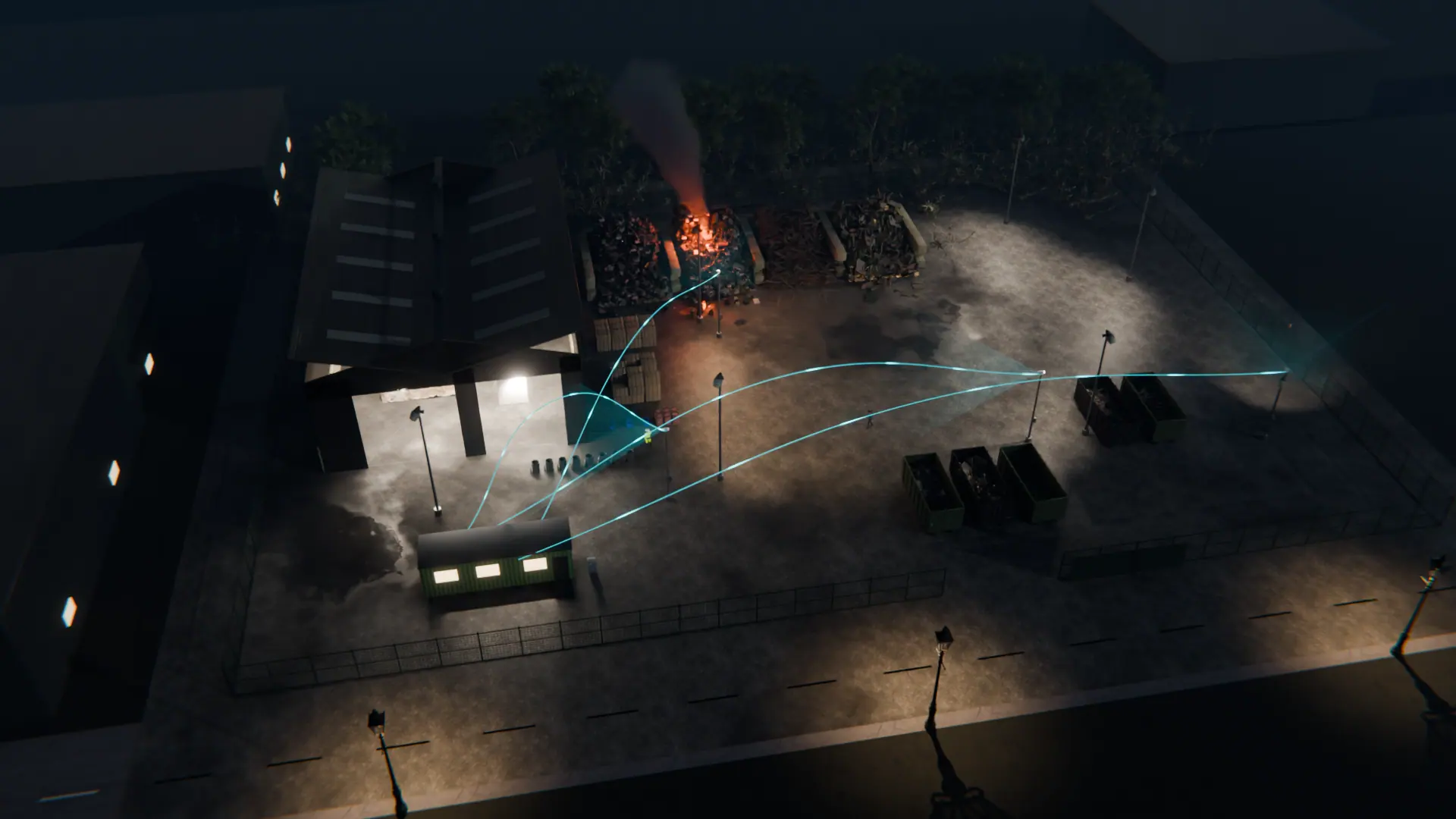
A free site assessment looks at your cameras and the areas where battery fires are most likely to start.
Illustrative 3D renderKeep reading, or see how Woodcock AI would cover your own site.