Fire and rescue services in England attended 256 industrial waste fires in 2025, up from 183 in 2021, and 32 of them lasted more than 24 hours. Lithium-ion batteries are a growing cause: NFCC reports more than 1,200 battery fires in bin lorries and waste sites across the UK in a year. Every figure below has its source and the date we last checked it.
By Woodcock AI · Published · Last checked 22 October 2026
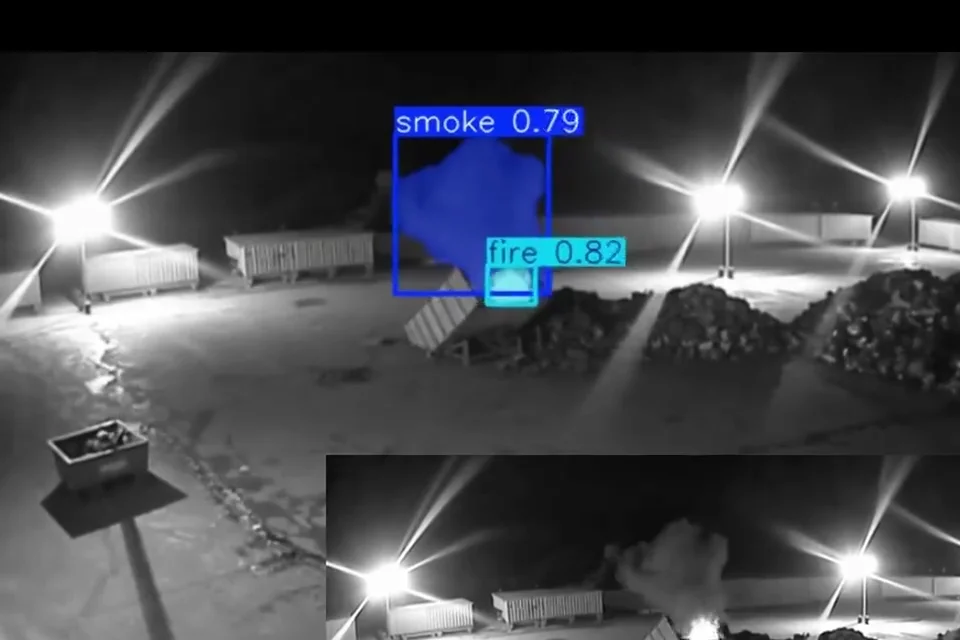
Real detection · Waste yardSmoke detectedAlert sent with the clipReal footage from a camera running Woodcock AI, 8-second loop.
England
How many waste fires are attended in England
In 2025, fire and rescue services in England attended 256 industrial waste fires, the highest of the five years in the latest government table. The count dipped in 2023 and has risen since.
256industrial waste fires attended in England in 2025MHCLG, Table A81
1,200+battery fires in UK bin lorries and waste sites in a yearNFCC, May 2024
Chart drawn by Woodcock AI from MHCLG Table A81 (fires by year ending December). Each row in the table is one incident.
Industrial waste fires attended in England, MHCLG Table A81
Year (ending December)
Fires attended
Lasting over 24 hours
2021
183
23
2022
219
25
2023
192
16
2024
212
22
2025
256
32
256
Fire and rescue services in England attended 256 industrial waste fires in the year ending December 2025, up from 183 in 2021. Of the 256, 195 were at recycling properties and 61 at other waste properties.
Chart drawn by Woodcock AI from MHCLG Table A81, using the recorded incident duration.Chart drawn by Woodcock AI from MHCLG Table A81. "Other" is a category used in the table itself.
Batteries
Lithium-ion batteries and waste fires
Batteries hidden in vapes, phones and other small electricals are thrown away in huge numbers, and when they are crushed or punctured in a bin lorry or at a site they can start a fire. These are the most quoted UK figures.
1,200+
More than 1,200 battery fires in bin lorries and waste sites across the UK in a year, up 71% from 700 in 2022. NFCC is reporting local authority research by Material Focus.
About 6 billion batteries were thrown away across the UK in a year, and 1.1 billion of them were hidden inside discarded electrical devices such as toothbrushes, phones and vapes.
A battery fire in waste can show first as a thin plume of grey or white smoke from a pile, a skip or a bale, before there is open flame. On infrared at night it can look like a pale haze drifting across the frame. That visible smoke is what video detection can pick up on cameras a site already has.
Permitted waste sites in England that store combustible waste usually need a fire prevention plan. These three points come up most often.
4 hours
For sites that need a fire prevention plan, the Environment Agency expects a fire to be extinguished within 4 hours, unless an alternative has been agreed.
The Environment Agency published appropriate measures for permitted waste battery facilities on 21 May 2026. Areas where waste batteries are stored, handled or treated must have appropriate fire detection and suppression.
Most waste fires are put out, but the ones that grow are the ones nobody spots early. The figures point to three practical steps.
Watch the out-of-hours window. A fire that starts after the site closes can grow for hours before anyone sees it. Make sure someone is alerted at night and at weekends, not just during shifts.
Plan for batteries in every load. Treat hidden batteries as a normal part of incoming waste: check loads at the tipping hall, keep a quarantine area and watch stockpiles and bale stores.
Layer your detection. Combine your fire alarm and suppression with heat or video detection where your fire risk assessment shows it helps. Our comparison of video AI, thermal and on-camera analytics explains where each fits.
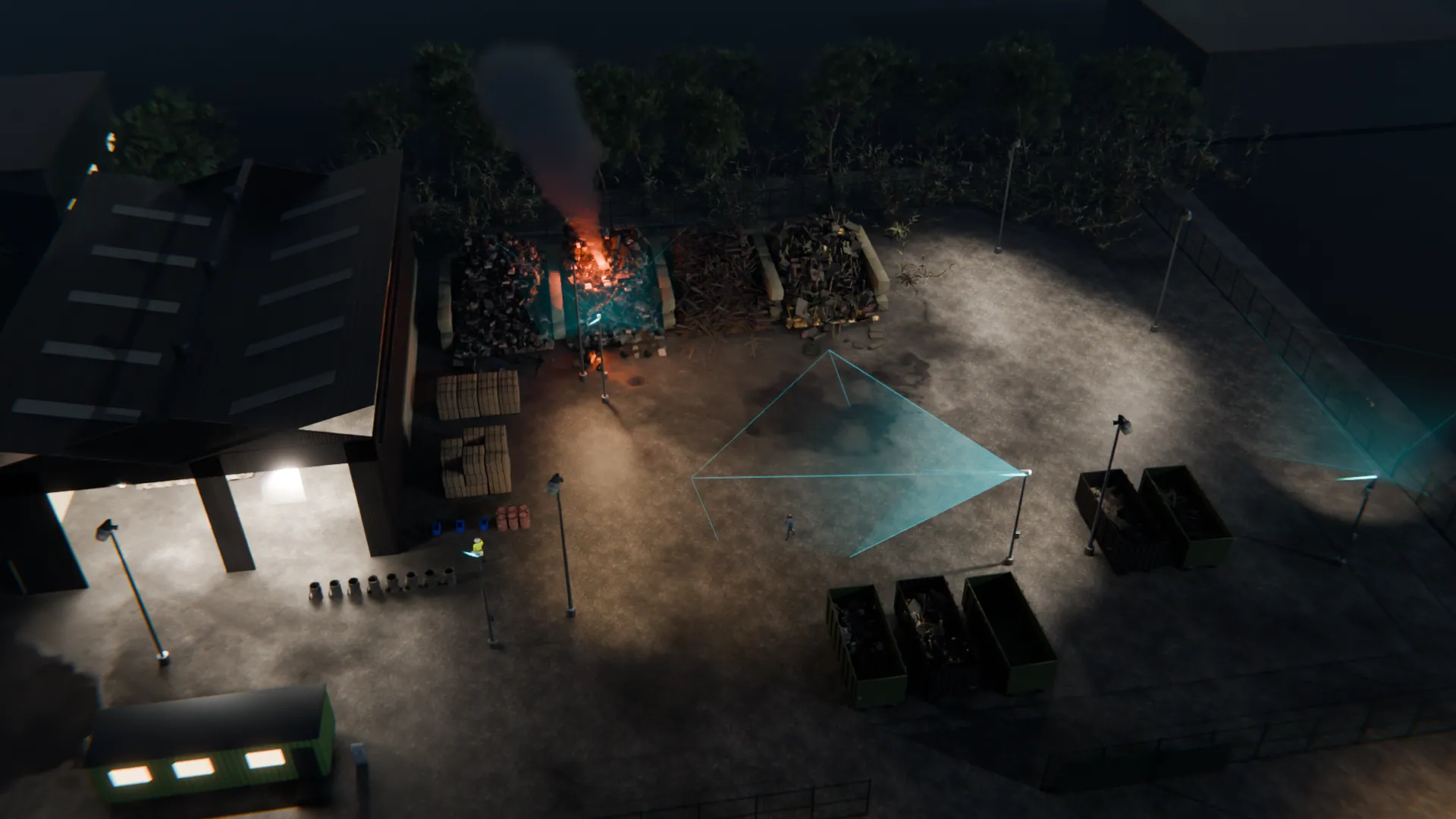
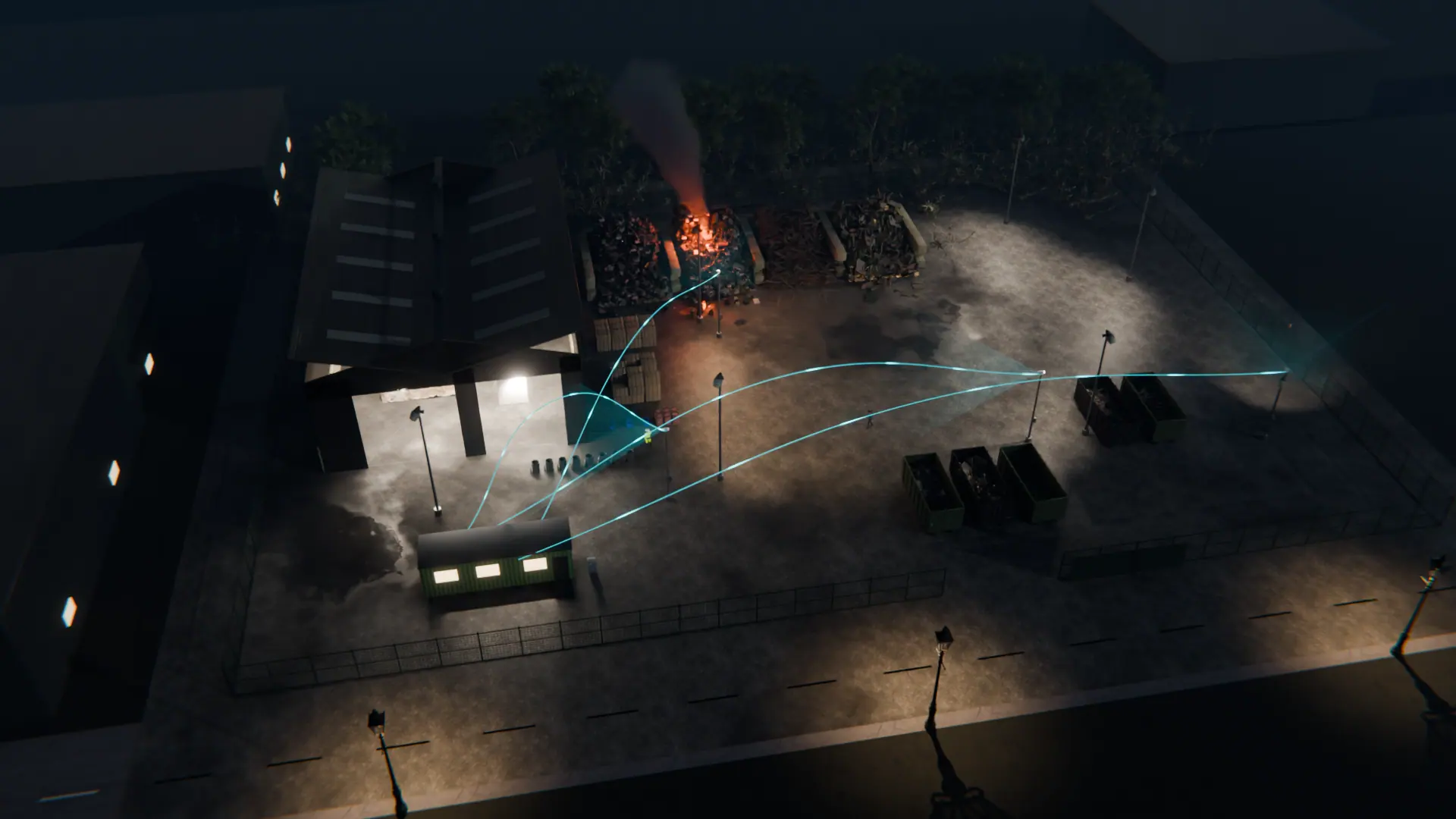
Illustrative 3D render of a Woodcock AI alert.
Out of hours
An alert with the clip, at any hour
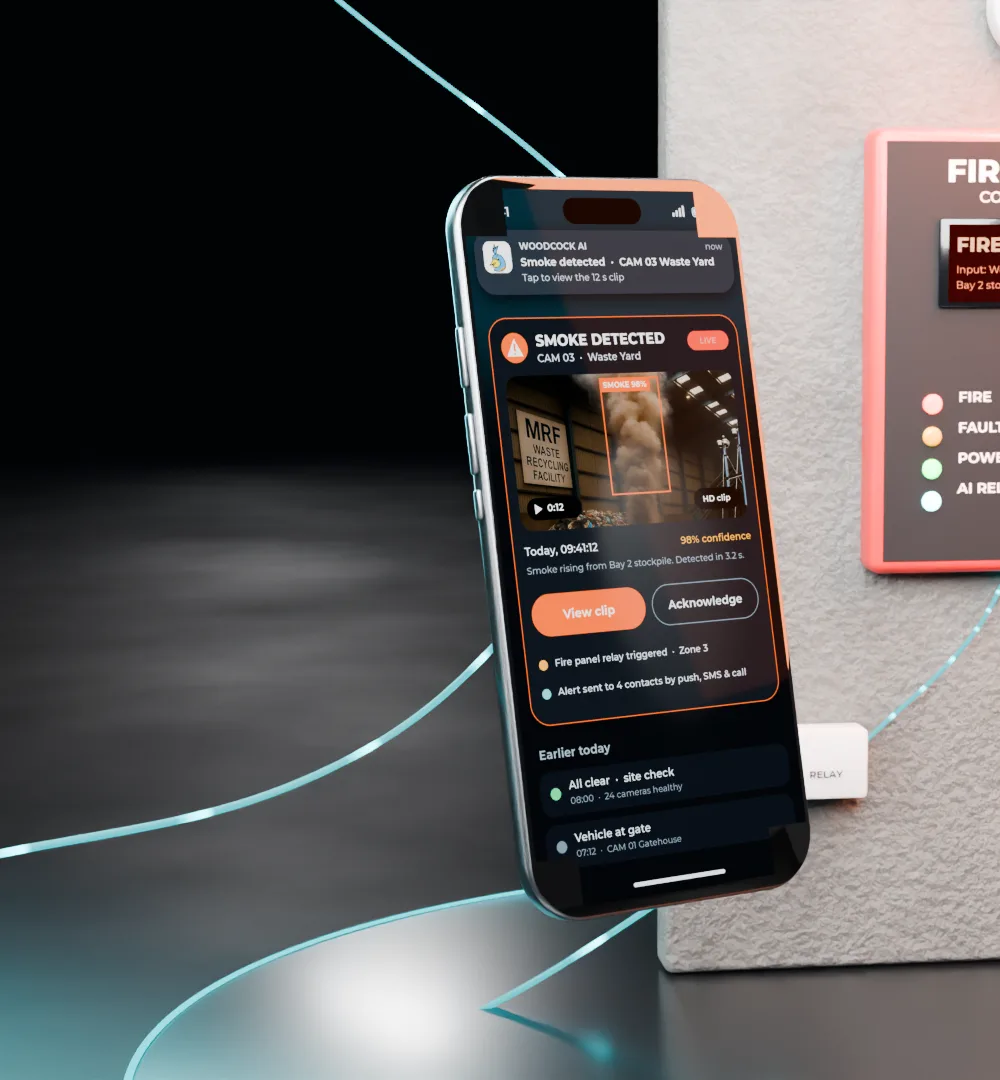
When the AI sees smoke or flame, the people you choose get an alert with the video clip, so they can check it and act, even when the site is closed. Every event is saved, so you can review what happened afterwards.
Woodcock AI watches the CCTV cameras a site already has for the first signs of smoke and flame, and sends an alert with the clip. It supports a fire prevention plan; it does not replace a certified fire alarm, suppression or the plan itself.
Method
How we checked these figures
We only publish figures we can trace to a public source, and we link to that source. For the England figures we downloaded MHCLG Table A81, which lists one row per industrial waste fire attended by a fire and rescue service, and counted the rows by year, by duration over 24 hours and by recorded main cause. The table counts fires at recycling and waste properties in England only, not the whole UK, and reflects records that reached the Incident Recording System by 3 May 2026, so later revisions may change the counts slightly.
A
MHCLG Table A81
Industrial waste fires attended at recycling and waste properties in England, one row per incident.
B
NFCC
UK-wide battery fires in bin lorries and at waste sites, from fire and rescue service reports.
C
ESA
UK-wide estimates of batteries thrown away and the cost of battery-related fires.
The battery figures come from NFCC and the ESA. They cover the whole UK, and the NFCC count includes fires in bin lorries as well as at waste sites, so they cannot be compared directly with the England table. We give the date of each source, because older estimates are often repeated as if they were current.
How many waste site fires are there in England each year?
Fire and rescue services in England attended 256 industrial waste fires in 2025, up from 183 in 2021, according to the MHCLG data table A81 published in July 2026 (GOV.UK). Counts in other sources differ because they measure different things.
Why do numbers from different sources not match?
They count different things. The MHCLG table counts fires attended by fire and rescue services at waste and recycling properties in England. The NFCC battery figure covers the whole UK and includes fires in bin lorries as well as at waste sites. The ESA cost figure is an estimate, not a count of fires. Always quote the source and year with a number.
How many waste fires are caused by lithium-ion batteries?
There is no single official count. NFCC reported more than 1,200 battery fires in bin lorries and waste sites in a year (NFCC, May 2024). An older Eunomia and ESA estimate put the share of UK waste fires caused by lithium-ion batteries at around 48% (January 2021).
How long do waste fires last?
Many are dealt with in hours, but some burn for days. In 2025, 32 of the 256 industrial waste fires in England lasted more than 24 hours (MHCLG Table A81).
Can I use these figures in my own documents?
Yes, but cite the original source and the date, not this page. Check the source for updates first, because figures are revised and new tables are published.
Next step
See where your site is exposed
A free site assessment looks at your cameras and the areas where fires are most likely to start out of hours.