

AI monitoring for scrapyards and metal recyclers
Woodcock AI adds smoke, fire, intrusion and vehicle detection to a scrapyard's existing CCTV. It watches scrap piles where hidden lithium-ion batteries can ignite, ELV and depollution areas, and the perimeter after hours, and sends the clip to the people you choose.
Lithium-ion batteries hidden in scrap
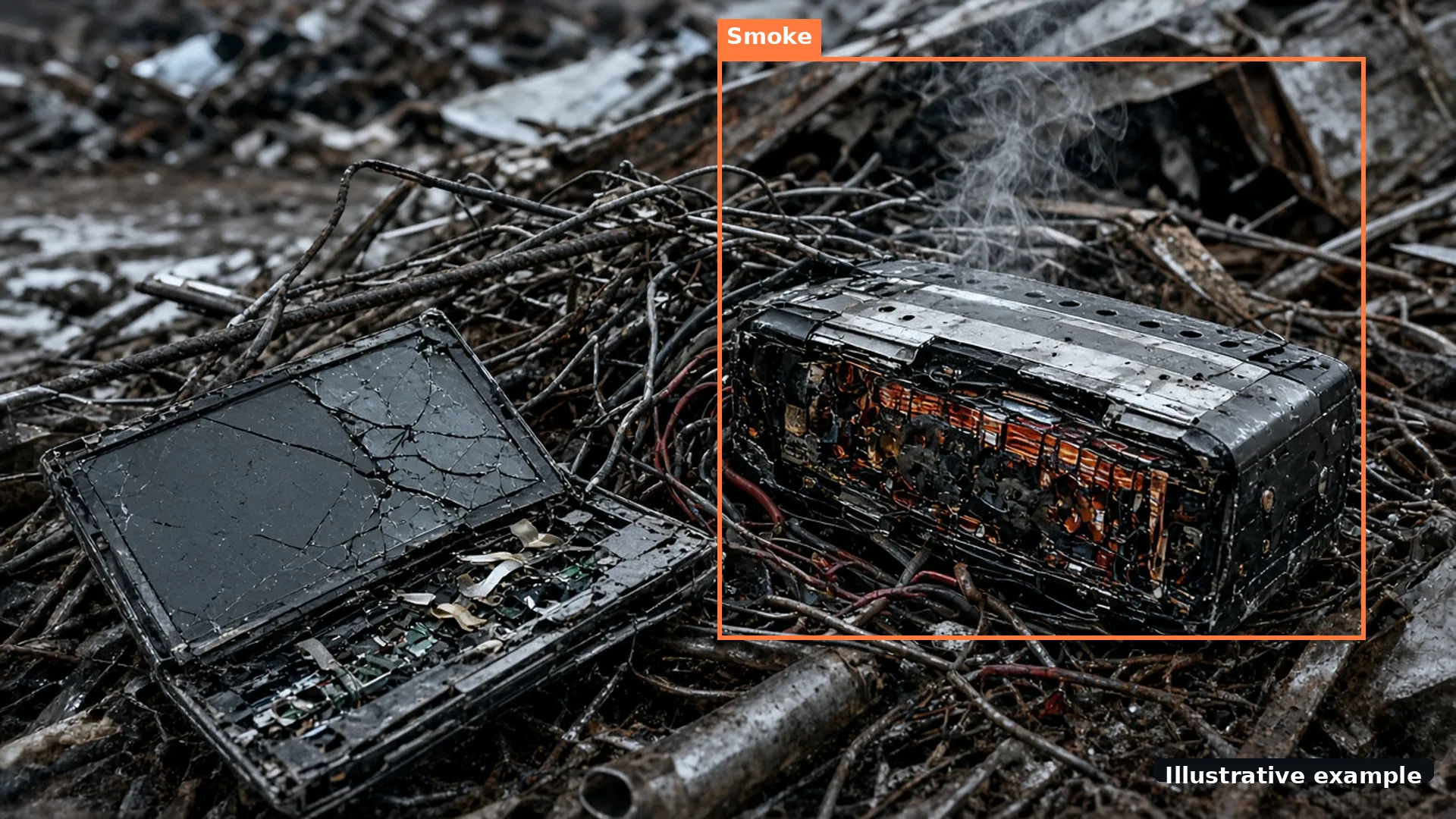
Laptops, power tools, vapes and e-bike packs end up in mixed scrap. Crushed, cut or punctured, a lithium-ion cell can overheat and catch fire, sometimes hours after the load arrived.
The British Metals Recycling Association's sector fire prevention guidance names improperly discarded WEEE and lithium-ion batteries as a fire risk for metal recyclers. Environment Agency appropriate measures for metal shredders say damaged lithium-ion batteries should be stored apart from liquids, damage and heat. Read how these fires start on our lithium-ion battery fires page, and see thermal runaway in the glossary.
Fires across the waste sector are tracked by government. The MHCLG release Number of industrial waste fires, England 2021 to 2025 records 256 industrial waste fires attended in England in 2025, up from 183 in 2021 (Table A81). More context is in our waste fire facts.
 Illustrative example
Vehicle depollution and ELV storage
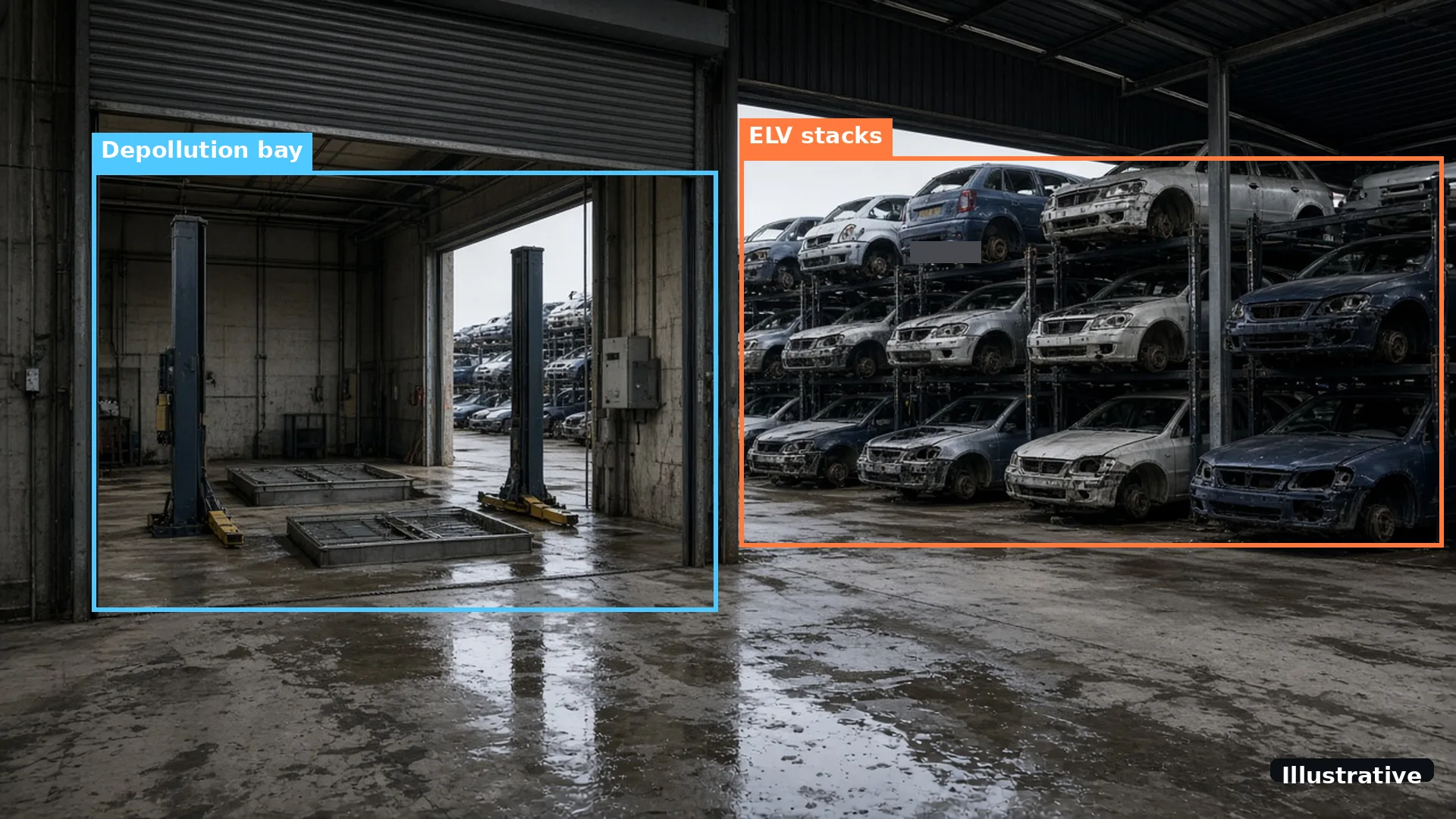
End-of-life vehicles bring batteries, fuel and oils on site. Environment Agency ELV appropriate measures say batteries should be removed as soon as possible, lithium-ion batteries stored apart, and depolluted and un-depolluted vehicles kept separate.
Depollution bays can also be hazardous areas under DSEAR, as the shredder guidance notes. Cameras that see the bay entrance, the ELV stacks and the battery storage give early sight of smoke in the places a fire is most likely to start. See depollution and ELV in the glossary.
 Illustrative
 Real detection
 Illustrative
Explore a scrapyard, area by area
Choose an area to see the risk there and what a camera needs to see.
Scrap piles
The risk: Mixed scrap can hide batteries and electrical items. Fires can start at the surface after a load is tipped or handled, or deeper in the pile.
What the camera should see: Watch the face of each pile from a camera with a clear view, day and night.
ELV stacks and depollution bay
The risk: Guidance says batteries should be removed from end-of-life vehicles as soon as possible, and depolluted and un-depolluted vehicles kept apart.
What the camera should see: Cover the depollution bay entrance and the ELV stacks so smoke or a vehicle fire is seen early.
Battery storage
The risk: Removed and damaged lithium-ion batteries should be stored apart from liquids, heat and damage, in a dedicated area.
What the camera should see: Point a camera at the battery cage or quarantine area, which is a likely place for a fire to start.
Gate and perimeter
The risk: Metal and plant attract theft, and empty yards attract trespass and arson after hours.
What the camera should see: Draw intrusion zones and lines on fence and gate cameras and set the hours they are armed.
Metal theft and intrusion
Scrap metal, plant and batteries attract theft, and empty yards attract trespass and arson. EA ELV guidance expects permitted sites to prevent intruders, theft and arson, with measures that include 24-hour surveillance such as CCTV.
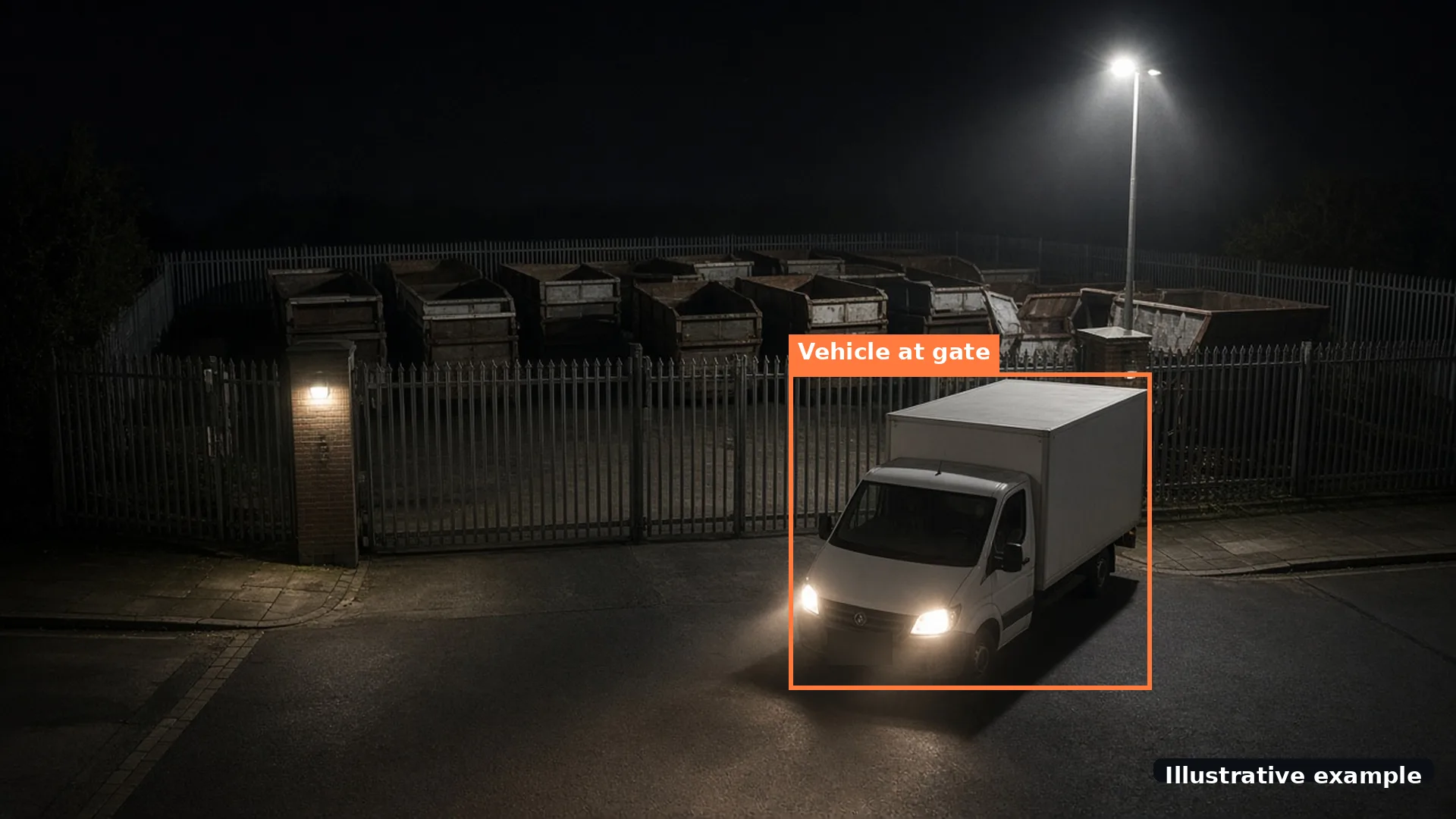
Woodcock AI turns that CCTV into alerts. Draw an intrusion zone or a line along the fence and across the gate, set the hours, and get the clip when someone enters. Vehicle detection, where supported, flags vans and lorries arriving at the gate out of hours. Scrap dealing itself is regulated under the Scrap Metal Dealers Act 2013, which covers licensing and payments.
 Illustrative example
Fire prevention plans for metal recyclers
Permitted metal recycling sites in England usually need a fire prevention plan. The Environment Agency FPP guidance aims to minimise the chance of a fire, put any fire out within four hours and stop it spreading.
Camera detection supports the detection part of your plan with early warning out of hours. It does not replace your alarm or your plan. Work through it with our fire prevention plan checklist.
How it works on your cameras, with the clip in every alert
The AI is self-learning and fitted to each site. It learns what is normal for each camera, such as dust, plant movement and floodlights, and every detection has a feedback button that goes into retraining for your site.
Alerts go by app push notification, email or SMS, each with the clip. Alerts to a monitoring centre (ARC) and phone-call alerts are available as optional add-ons. Read how to reduce CCTV false alarms and the video smoke detection guide.
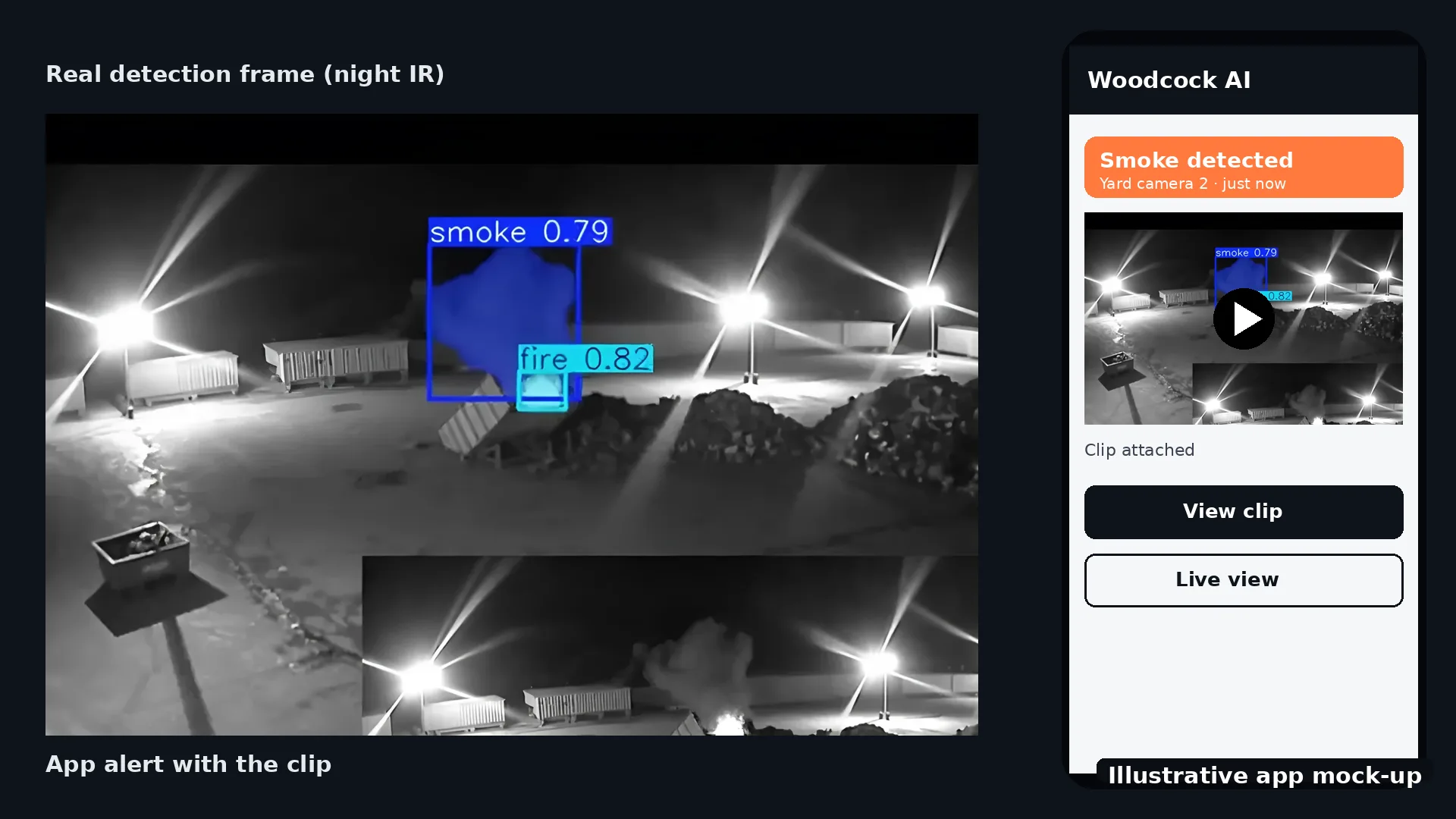 Illustrative app mock-up
Is your scrapyard covered? A quick check
Tick what is already true on your site. Your answers are saved in this browser only.
Anything unticked is worth raising in a free site assessment: we'll map your scrap piles, ELV area and perimeter to the cameras you have.
Why do scrapyards catch fire?
A common cause is lithium-ion batteries and electrical items (WEEE) left in scrap. When they are crushed, cut or damaged they can overheat and ignite. The British Metals Recycling Association's fire prevention guidance highlights improperly discarded WEEE and batteries as a fire risk for metal recyclers.
Can CCTV spot a battery fire early in a scrap pile?
It can spot it once smoke or flame is visible to the camera. Woodcock AI watches your existing cameras for visible smoke and flame and sends the clip. Heat hidden deep inside a pile is not visible to an ordinary camera; a thermal camera is the tool for that.
Can it watch the depollution area?
Yes, where a camera can see it. A camera on the depollution bay entrance, the ELV stacks or the battery storage area can be watched for smoke and flame, and for people or vehicles out of hours.
Does it confuse cutting or torch fumes with fire?
The AI is self-learning and fitted to each site, so it learns what normal activity looks like on each camera, and every detection has a feedback button that goes into retraining. How it handles cutting areas on your cameras is confirmed at the free site assessment.
Can it detect intruders after hours?
Yes. Intrusion detection runs in the zones and schedules you set on fence, gate and yard cameras, and raises an alert with the clip when someone enters a closed yard.
Can it detect vehicles entering out of hours?
Yes, vehicle detection where supported. Vehicles arriving at the gate or in the yard out of hours can raise an alert with the clip. Which cameras support it is confirmed at the assessment.
Does it help my fire prevention plan?
It can support the detection part of your plan with early visual warning out of hours. It does not replace your fire alarm or the measures in your plan, and your plan and the Environment Agency decide what is acceptable.
Do I need new cameras?
Usually not. It works with most existing IP CCTV and recorders, and the free site assessment confirms which cameras and streams can be used before anything is set up.
Can alerts go to a monitoring centre?
Yes, as an option. Alerts to a monitoring centre (ARC) and phone-call alerts are available as optional add-ons. Standard alerts go to the people you choose by app, email or SMS.
How do I start?
Book a free site assessment. We map your scrap piles, ELV and depollution areas, battery storage and perimeter to the cameras you already have.
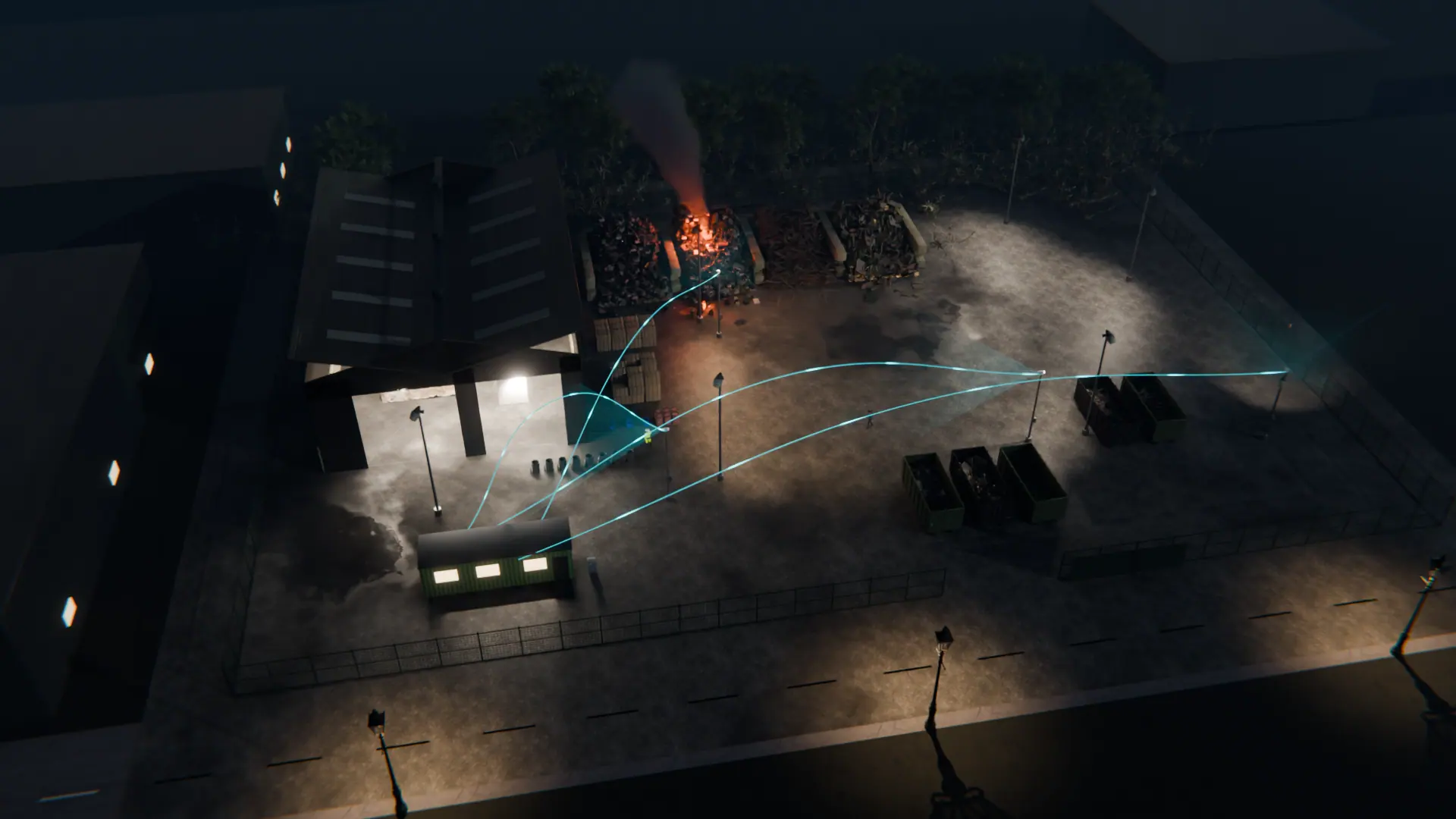
Map your scrapyard to the cameras you have
A free site assessment maps your scrap piles, ELV area, battery storage and perimeter to your existing cameras, and confirms what is supported before anything is set up.
Illustrative 3D render