

AI CCTV
CCTV where software analyses the video to recognise what is in the picture, such as people, vehicles, smoke or flame, and raises an alert, rather than only recording it for someone to review later.
Read more: How it worksPlain-English definitions of the terms used across Woodcock AI guides, from ARC and edge server to RTSP, freeboard and thermal runaway. Each term has its own link you can share, and a pointer to the page that explains it in more depth.
CCTV where software analyses the video to recognise what is in the picture, such as people, vehicles, smoke or flame, and raises an alert, rather than only recording it for someone to review later.
Read more: How it worksA monitoring centre that receives alarms from sites, checks them and responds, for example by contacting the keyholder or the emergency services. Alerts to a monitoring centre (ARC) and phone-call alerts are available as optional add-ons.
Read more: FAQChecking whether an alarm is real before acting on it, usually by looking at the camera view or a recorded clip of the moment it was raised.
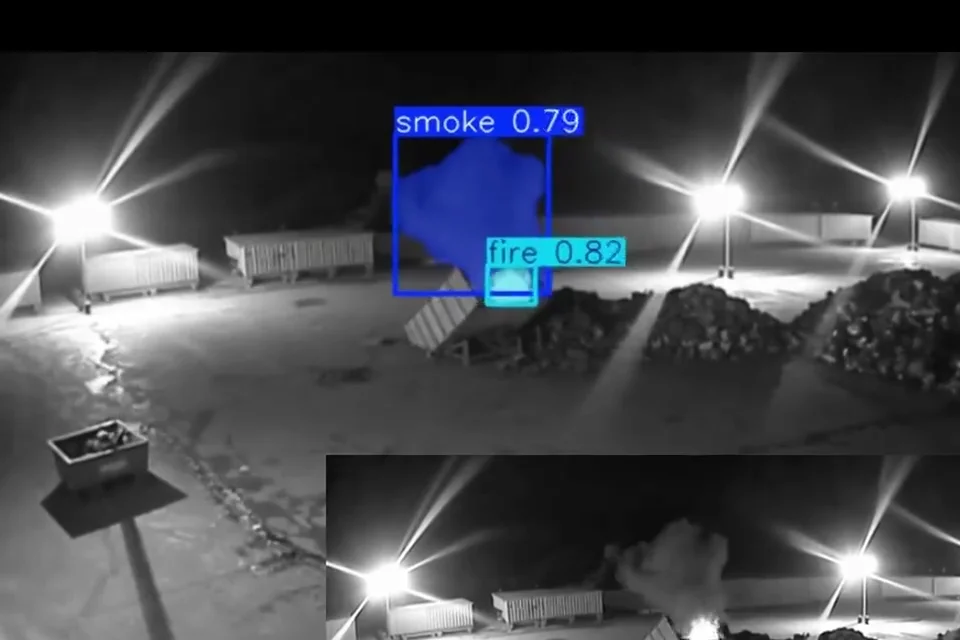
Read more: Reducing false alarmsThe rectangle an AI draws around something it has detected in a frame, usually with a label such as smoke, fire, person or vehicle.
Read more: Video smoke detection guideDetection rules that run inside the camera itself, such as motion, line crossing or intrusion zones. Capabilities vary widely by model and brand.
Read more: Video AI vs on-camera analyticsA short piece of recorded video from the moment of a detection. Woodcock AI sends the clip with every alert so it can be checked straight away.
Read more: How alerts workRemoving batteries, fuel, oils and other fluids and hazardous parts from an end-of-life vehicle before it is dismantled or crushed. Batteries should be removed as soon as possible and stored safely apart.
Read more: Scrapyards and metal recyclersOne type of detection that can be switched on for a camera, such as smoke and fire, intrusion or a safety module. Which modules suit a site is confirmed in the free site assessment.
Read more: Detection modulesDigital video recorder. A recorder for analogue CCTV cameras, often connected by coaxial cable. Many newer DVRs can also provide network video streams.
Read more: How it worksA small computer installed on site that runs the AI on the camera streams locally, so video does not have to leave the site to be analysed. Woodcock AI can process video on an edge server on site or in the Woodcock AI Cloud.
Read more: Edge or cloudA vehicle that has reached the end of its life and is treated as waste. Permitted sites must depollute ELVs and store depolluted and un-depolluted vehicles apart, under Environment Agency guidance.
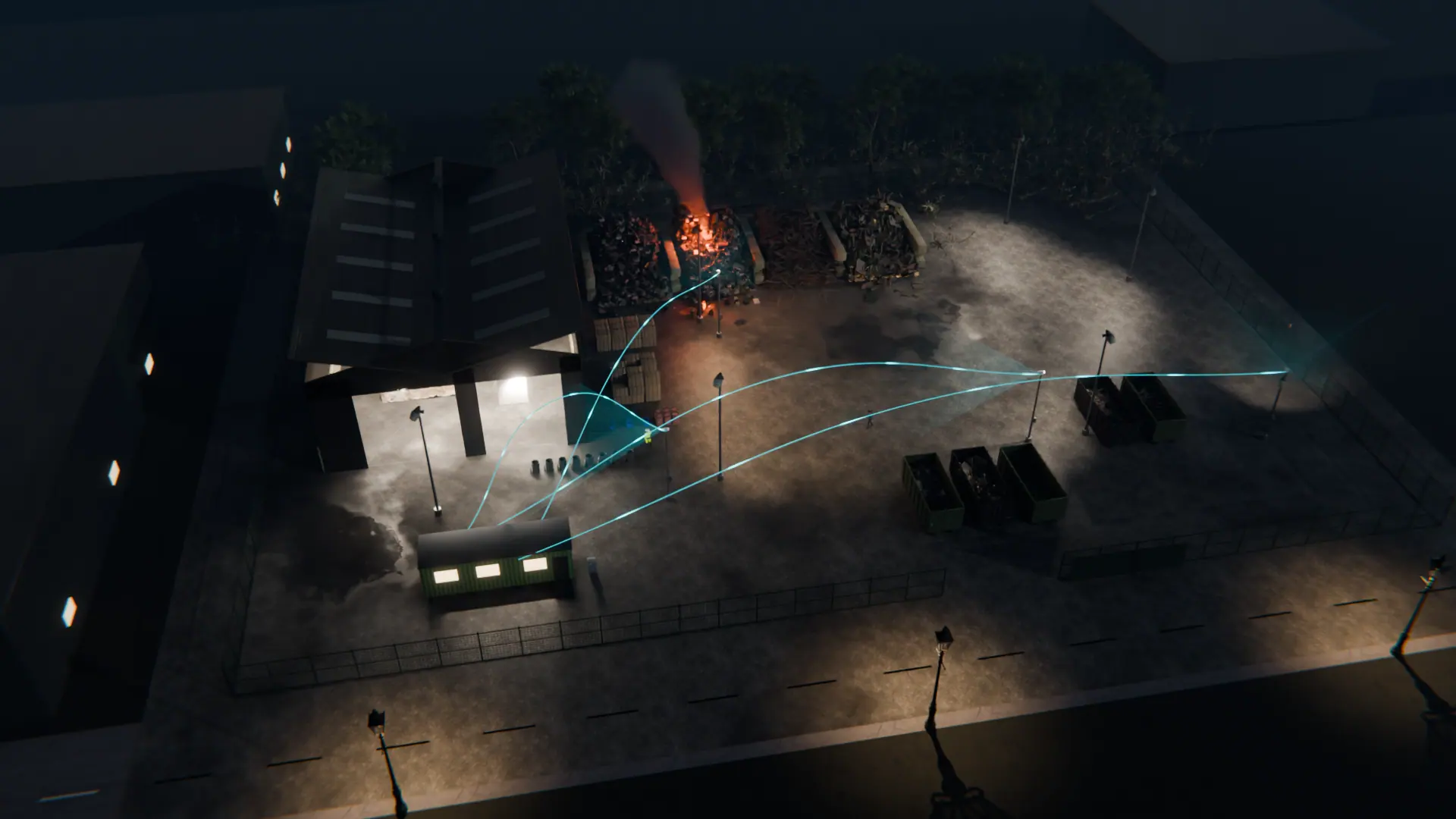
Read more: Scrapyards and metal recyclers Illustrative 3D render
An alert raised when nothing that matters has happened, for example motion detection reacting to rain, a spider on the lens or headlights.
Read more: How to reduce CCTV false alarmsMarking a detection as correct or false so the AI can learn from it. Every Woodcock AI detection has a feedback button, and that feedback goes into retraining for your site.
Read more: Per-site learningA plan, required by the Environment Agency for many permitted waste sites in England, that sets out how a site prevents fires, detects them early and limits their spread.
Read more: FPP checklistIn fire prevention planning, the gap kept between the top of a stockpile and the top of the walls of the bay that holds it, so material cannot spill over or spread fire. The required gap is set out in Environment Agency guidance.
Read more: FPP checklistAn area inside a pile or object that is hotter than its surroundings, often an early sign of a fire. A hot spot hidden inside a pile is not visible to an ordinary camera until smoke or flame appears.
Read more: When thermal is better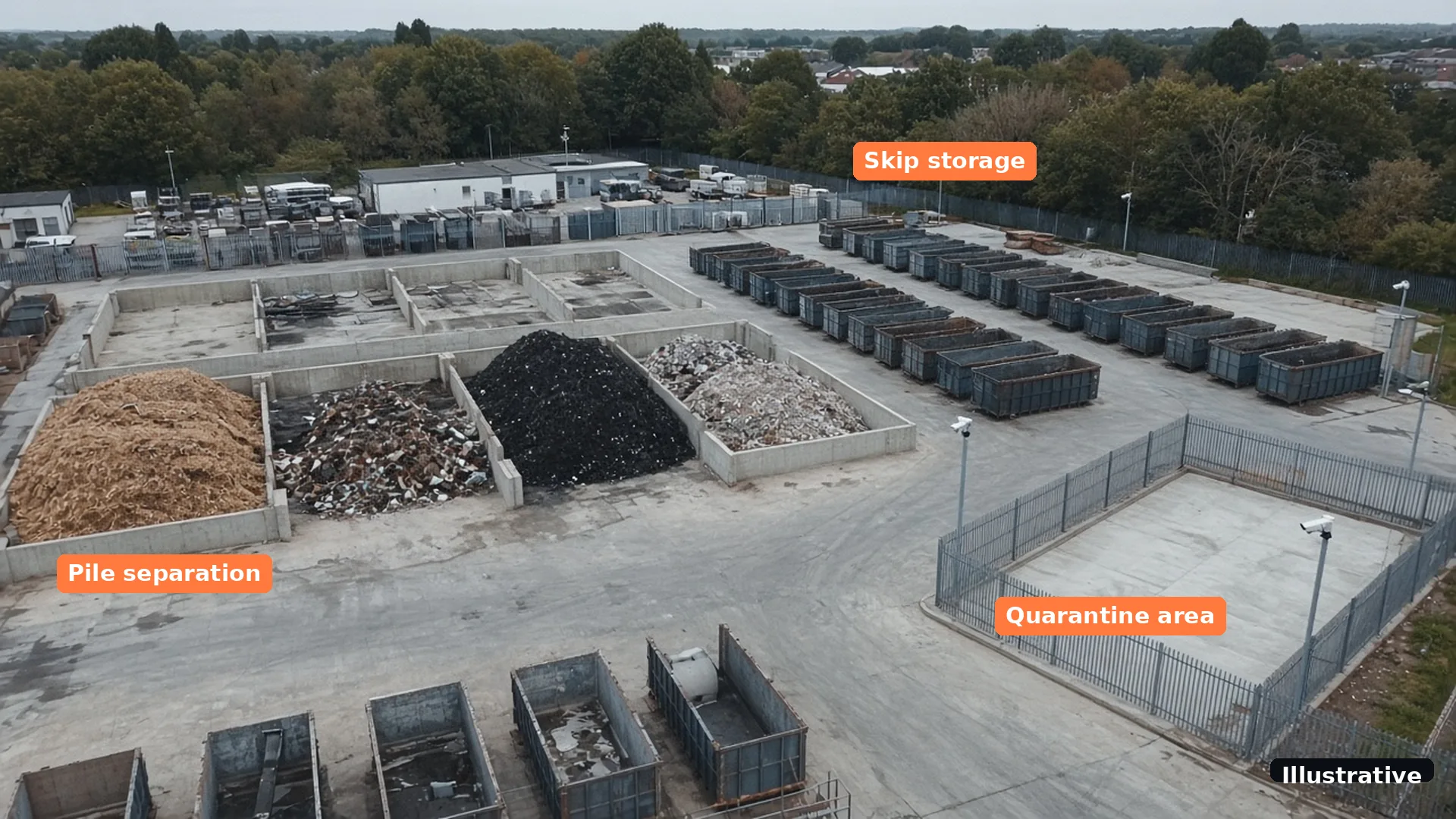 Illustrative
Light just beyond what the eye can see. Many CCTV cameras use built-in infrared lights to see at night, which gives the familiar black and white night image.
Read more: IR and false alarmsDetecting people or vehicles entering an area where they should not be, usually within zones and schedules that you set.
Read more: AI intrusion detectionA network camera that sends its video over a computer network. Most modern CCTV cameras are IP cameras, and most can provide a stream that AI software can analyse.
Read more: How it worksA detection rule that raises an alert when something crosses a line drawn on the camera view, for example along a fence or across a gateway.
Read more: Intrusion detectionA chain reaction inside a damaged or faulty lithium-ion battery cell in which heat builds rapidly, often releasing smoke and flammable gas before it ignites. It is a growing cause of fires at waste sites.
Read more: Lithium-ion battery firesThe simplest form of video detection: it raises an alert when enough pixels change between frames. It cannot tell what moved, which is why it causes many false alarms.
Read more: Why motion detection hits a ceiling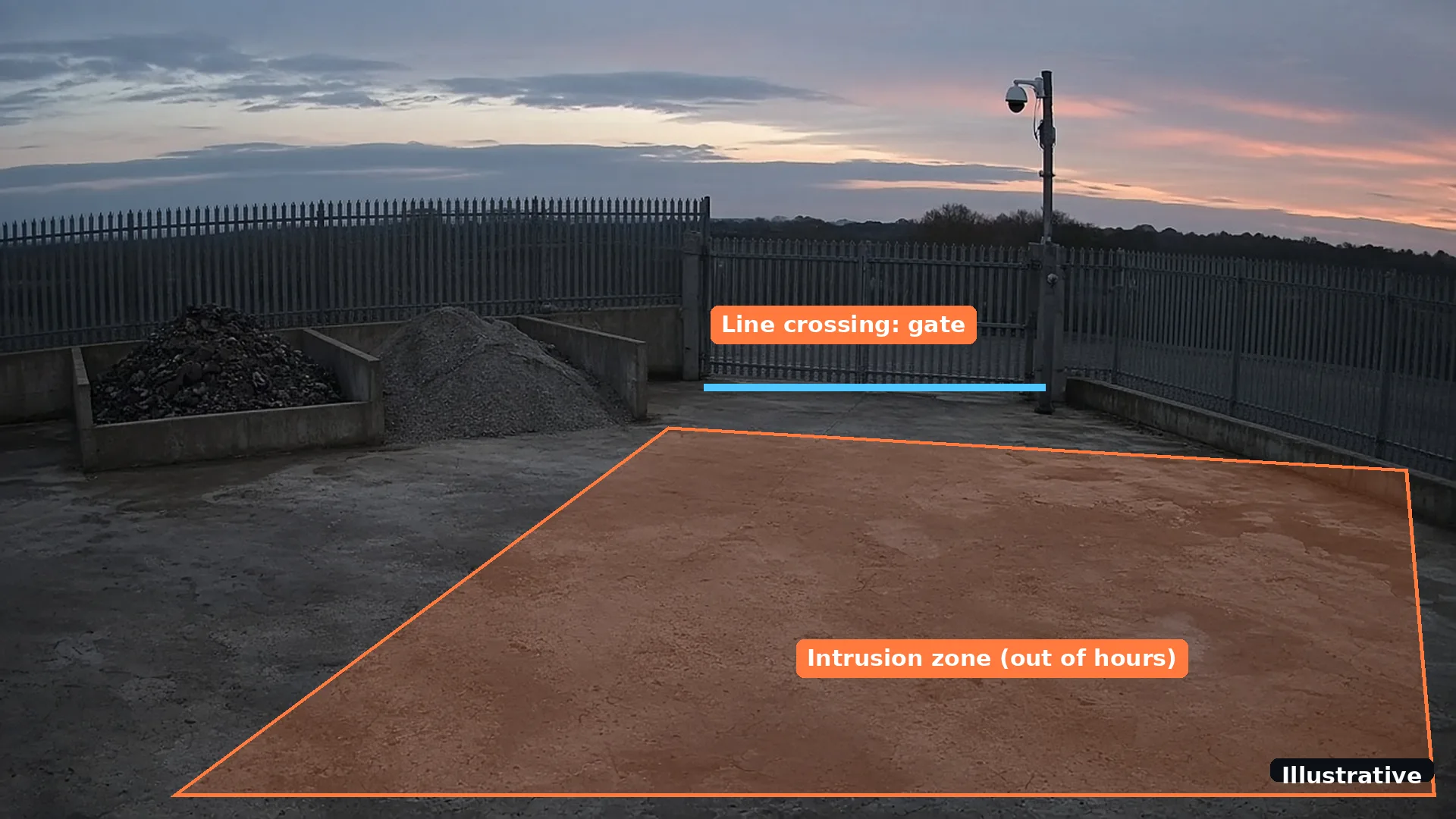 Illustrative
Network video recorder. A recorder for IP cameras that stores their video and usually lets other systems connect to the camera streams.
Read more: How it worksAn industry standard that lets IP cameras, recorders and software from different makers work together.
Read more: Which cameras connectA safety module that checks camera views for personal protective equipment. Woodcock AI offers safety modules such as PPE detection, where supported, confirmed in your site assessment.
Read more: PPE detectionIn fire prevention planning, a space kept clear on a waste site where burning or suspect material can be moved and isolated during an incident.
Read more: FPP checklistReal Time Streaming Protocol. A common way for cameras and recorders to provide a live video stream to other software, such as an AI detection system.
Read more: Connecting camerasAI that improves for a specific site over time. Woodcock AI fits a self-learning AI to each site, which learns what is normal for each camera, helped by the feedback on its detections.
Read more: How it worksUsing software to recognise the visible shape and movement of smoke in an ordinary camera picture. It supplements fire alarms and does not replace them.
Read more: Video smoke detection guide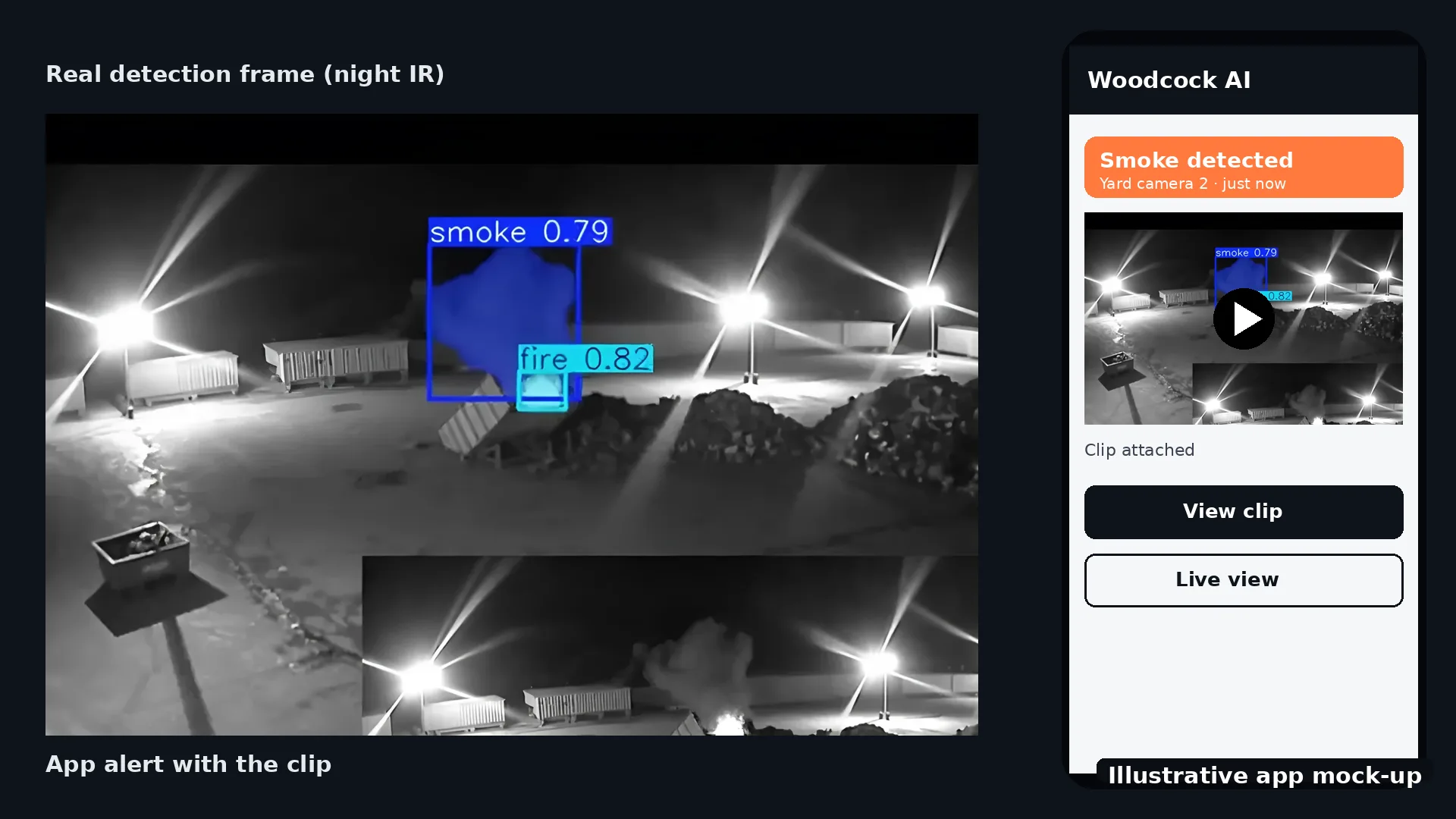 Illustrative app mock-up
 Real detection
A camera that measures heat rather than visible light, so it can show hot spots that an ordinary camera cannot see. It needs dedicated thermal hardware.
Read more: Video AI vs thermalVideo content analysis. A general term for software that analyses video to detect events, from simple rules such as motion or line crossing to AI classification.
Read more: How the options compareRecognising vehicles such as cars, vans and lorries in a camera view, for example one arriving at a closed gate out of hours. Woodcock AI offers vehicle detection where supported, confirmed in your site assessment.
Read more: Intrusion and vehiclesAnother name for software that analyses CCTV video automatically, either on the camera, on a recorder or server, or in the cloud.
Read more: How the options compareA fire at a site that stores or processes waste, such as a stockpile, bale store or tipping hall fire. These can burn for long periods and are a major concern for fire services and regulators.
Read more: Waste fire factsAn area drawn on a camera view where detection is active. Zones, together with schedules, decide where and when alerts are raised.
Read more: Zones and schedulesNo terms match. Try a shorter word, or browse the FAQ.
A free site assessment reviews your cameras, recorder and site, and explains in plain English what is supported before anything is set up.
Illustrative 3D render